

Source: ITM Semiconductor (via MacRumors)
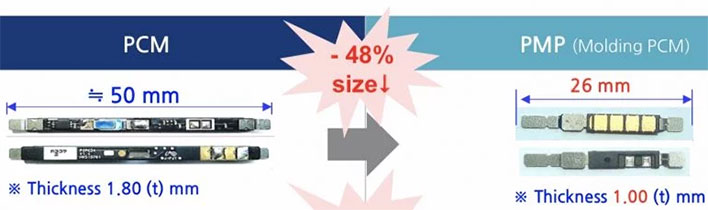
To improve things even further, ITM Semiconductor has developed a battery protection circuit module (PCM) that is nearly 50 percent smaller. This is the circuitry that protects hardware from over charging and over discharging. The module also combines the protection circuit with a MOSFET and PCB, which negates the need for a chassis for all this stuff.
While this may not seem like a huge deal, as smartphones become thinner and more sophisticated, space is at a premium. This overall reduction means Apple and Samsung could potentially use larger battery packs inside their next-generation smartphones. It’s not a given that either will actually do that, but if so, we could be looking at even longer battery life next round.
In addition to next-gen smartphones, it’s said this tech could also be applied to tablets and PCs (laptops, we assume).
‘).insertAfter(jQuery(‘#initdisqus’));
}
loadDisqus(jQuery(‘#initdisqus’), disqus_identifier, url);
}
else {
setTimeout(function () { disqusDefer(); }, 50);
}
}
disqusDefer();
function loadDisqus(source, identifier, url) {
if (jQuery(“#disqus_thread”).length) {
jQuery(“#disqus_thread”).remove();
}
jQuery(‘
‘).insertAfter(source);
if (window.DISQUS) {
DISQUS.reset({
reload: true,
config: function () {
this.page.identifier = identifier;
this.page.url = url;
}
});
} else {
//insert a wrapper in HTML after the relevant “show comments” link
disqus_identifier = identifier; //set the identifier argument
disqus_url = url; //set the permalink argument
//append the Disqus embed script to HTML
var dsq = document.createElement(‘script’); dsq.type = ‘text/javascript’; dsq.async = true;
dsq.src = ‘https://’ + disqus_shortname + ‘.disqus.com/embed.js’;
jQuery(‘head’).append(dsq);
}
jQuery(‘.show-disqus’).show();
source.hide();
};
function disqusEvent()
{
idleTime = 0;
}