

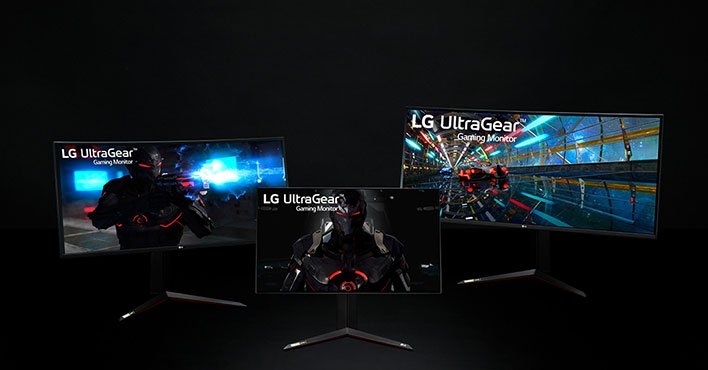

All three of its 2020 “Ultra” models have received a CES Innovation Award. Collectively, the upcoming lineup targets both professionals and gamers, though there are key differences between the three displays.
LG UltraWide 38WN95C Monitor Specs and Features
LG rates the typical brightness at 450 nits. However, this model carries the DisplayHDR 600 badge, and part of the requirement for that designation is being able to hit at least 600 nits. It’s not clear what the peak brightness is, but it won’t be less than 600 nits.
Connectivity options include a Thunderbolt 3 port, two HDMI inputs, a DisplayPort, and a pair of USB downstream ports.
LG UltraGear 27GN950 and UltraFine Ergo 32UN880 Monitors Specs and Features
LG’s other nano IPS display is the UltraGear 27GN950. As the model name implies, this is a 27-inch monitor. It offers a native 4K resolution (3840×2160) that is capable of up to 160Hz, which is the overclocked rating (at stock settings, the refresh rate runs at 144Hz.), and 1ms response time.
As with the 37.5-inch panel outlined above, this 27-inch model sports a 450 nits typical brightness rating and is DisplayHDR 600 certified. It also features the G-Sync Compatible badge. It’s essentially a smaller version of that other display, though it lacks a Thunderbolt 3 connector.

“Our 2020 monitor lineup surpasses expectations with professional-level performance, picture quality and speed,” said Jang Ik-hwan, head of LG’s IT business division. “The LG Ergo brings new value to users, ensuring comfort and well-being with its uniquely adjustable stand while the 27-inch UltraGear 4K model offers superior picture quality for the ultimate gaming experience and the 38-inch UltraWide builds on LG’s legacy of excellence in 21:9 displays.”
LG did not say when these monitors will be available or how much they will cost. We image those details will be revealed at CES.
‘).insertAfter(jQuery(‘#initdisqus’));
}
loadDisqus(jQuery(‘#initdisqus’), disqus_identifier, url);
}
else {
setTimeout(function () { disqusDefer(); }, 50);
}
}
disqusDefer();
function loadDisqus(source, identifier, url) {
if (jQuery(“#disqus_thread”).length) {
jQuery(“#disqus_thread”).remove();
}
jQuery(‘
‘).insertAfter(source);
if (window.DISQUS) {
DISQUS.reset({
reload: true,
config: function () {
this.page.identifier = identifier;
this.page.url = url;
}
});
} else {
//insert a wrapper in HTML after the relevant “show comments” link
disqus_identifier = identifier; //set the identifier argument
disqus_url = url; //set the permalink argument
//append the Disqus embed script to HTML
var dsq = document.createElement(‘script’); dsq.type = ‘text/javascript’; dsq.async = true;
dsq.src = ‘https://’ + disqus_shortname + ‘.disqus.com/embed.js’;
jQuery(‘head’).append(dsq);
}
jQuery(‘.show-disqus’).show();
source.hide();
};
function disqusEvent()
{
idleTime = 0;
}