

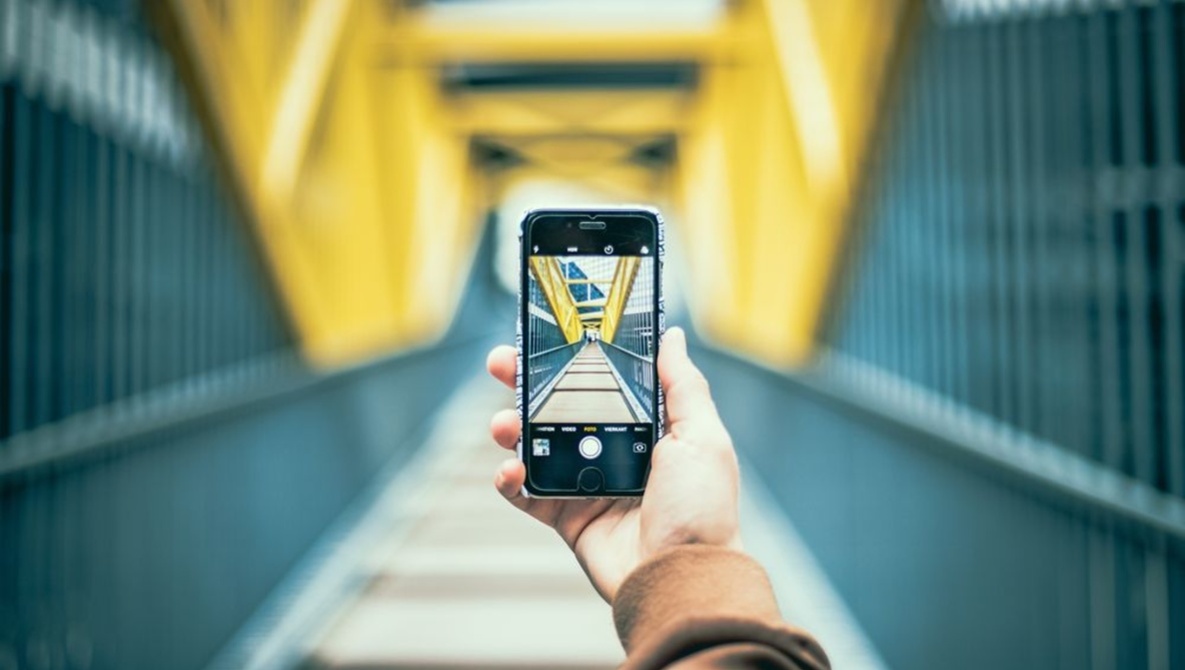
It might seem with the focus upon the remarkable achievements of the latest smartphone cameras that traditional camera manufacturers have realized they are playing catch-up and trying to chase down the proverbial boat. The truth is that they’ve already missed it.
What does the photography market mean to camera manufacturers? Surely, it’s a simple question of customers who need to take photos and want a camera — a tool — to do this? However, in the same way the GPS receiver, fitness tracker, and music player have been usurped by the smartphone, so too has the camera. Of course, the physics of light mean that the small sensor and lens inside a Google Pixel 4 can’t be equivalent to those of a Sony Alpha a7R IV with Zeiss Batis 85mm. In fact, it isn’t even equivalent to the beginner-oriented Nikon D3500 with a kit 18-55mm lens. The sticking point? The $450 wrapped up in a package that weighs 570 g. Compare that to the $800 Pixel the consumer would be buying anyway, which only weighs 162 g and takes, for all intents and purposes, equivalent photos. Here are three reasons that challenge the relevancy of traditional camera manufacturers.
1. Consumers Don’t Want Traditional Digital Cameras
Digital camera sales peaked at 120 million units in 2011 and have been in freefall ever since. That’s not to say that the traditional digital camera is suffering — far from it, as CIPA sales data for DSLR and mirrorless suggest that they are holding their own, although Canon is a little more pessimistic about the contraction of the market. High-end pros will always need high-end gear, and for this reason, there will be a place for the likes of Leica, Phase, and Hasselblad (the comparison below is for a smartphone and DSLR at the pixel level). What is more worrying for manufacturers is how ubiquitous the physical components of a camera have become at the low and middle sectors of the market, which has led to the production of passingly good smartphone cameras.


2. The Post-Production Revolution
The real revolution in photography has come in post-production. To pros, this is perhaps self-evident, as Adobe Photoshop demonstrates the power of digital manipulation time and again. That represents the first phase of the post-production revolution, with the emphasis on after the photo is captured. However, it is the (near) real-time post-production and communication of imagery that has been transformative. The new players in this market, in stark contrast to Photoshop-based techniques that create significantly enhanced images on a PC, have developed workflows that produce images that look good on small screens.

The key ingredients have been to target the principle viewing devices (smartphones), develop innovative algorithms that create images that look similar to those from a DSLR, process them in near-real time, and transmit them instantaneously. This change in the industry can be likened to the situation facing video-streaming services. It was originally thought that owning the network was what counted — if you controlled the underlying infrastructure, you controlled the distribution. However, Netflix has demonstrated that this isn’t the case: as the network became multi-faceted and ubiquitous, it was production that principally mattered.
3. Smartphones Are Where the Real Development Is Happening
We will always need pro-level cameras, with clear parallels shown in the professional video camera market, which is vanishingly small. Ironically, they are seeing cannibalization of their sales by DSLRs and mirrorless cameras. However, the eye-wateringly clever stuff is currently happening in near-real-time post-production, with a heavy dose of hardware miniaturization.
The key is to making a camera that will fit inside a thin block that measures about five by two inches and can produce images that appear visually the same as those from a DSLR. Where are Nikon and Canon in this space? In contrast, Sony is heavily invested in image sensor production, as well as making its own phones. Leica is a technical partner with Huawei, while Xiaomi has recently asked its users which manufacturer it should partner with.
Arguably, Google and Apple have done more in this space than anyone else, iterating over very short product cycles. The key has been to implement multi-shot imaging, where the manufacturer develops their own camera app to complement the hardware in the smartphone. The iPhone 3 is generally credited with introducing the photography revolution to smartphone shooters, and the sector has seem dramatic innovation since.
Underpinning all this innovation has been computational photography, which improves the final image by combining multiple shots from one (or more) cameras. LG and Huawei led the multi-camera charge, although Google won praise for the quality of its single camera processing. However, with the computational power to do the heavy lifting on the phone itself, the latest generation of phones are all multi-camera and produce remarkable results.
What’s the Future?
So, what is it that smartphone cameras are doing right? Much of it is simple automatic processing for brightness, contrast, color grading (including saturation), and sharpness, all things we would manually do in post-production. However, multi-shot HDR and the related noise reduction are easy wins. The addition of larger aperture lenses, image stabilization, and focusing have improved cameras, allowing the introduction of night shooting (such as Google’s Night Sight). You only have to look at the camera on my 2016 LG G5 to see the impressive roll call of features back then: slow motion, time-lapse, montage, pop-out, and panorama.
The key ingredient is — of course — that all of this is happening on the phone. Consumers not only want the smallest device possible (that can produce good results), but also to be able to share their latest creations immediately. There is no sense of urgency in adding these features to traditional cameras. Sure, manufacturers produce pleasing JPEGs straight out of camera, while there is usually the availability of raw processing. Likewise, the addition of Wi-Fi and Bluetooth have made their way into the feature set. Yet, these offerings are a long way from producing in-camera HDRs or super-resolution images. Certainly, multi-shot raw processing is beyond the capabilities of pretty much any mobile device, yet it comes back to the features that consumers want — raw images are not among them, evidenced by the miniscule number of smartphone shooters that turn on raw capture. It’s not that manufacturers can’t add some of these options: Sony has had a JPEG panorama mode for some time, so multi-shot capture and real-time processing can be achieved.
Where does this leave camera manufacturers? They are currently wedded to plowing a traditional furrow with limited innovation or cross-over into the mobile space. What feature set would persuade high-end smartphone shooters to purchase a camera? Algorithms are fast becoming the distinguishing factor, even among camera manufacturers, with Sony’s Eye AF a good example. When will smartphones usurp the camera crown?
Lead image courtesy of Fernando Stohr via Unsplash, used under Creative Commons.