



The exponential increase resulted in Mac systems being twice as susceptible to malware threats as Windows-based PCs. Surprised? Admittedly, so are we.
“Mac threats increased exponentially in comparison to those against Windows PCs. While overall volume of Mac threats increased year-over-year by more than 400 percent, that number is somewhat impacted by a larger Malwarebytes for Mac userbase in 2019. However, when calculated in threats per endpoint, Macs still outpaced Windows by nearly 2:1,” Malwarebytes noted it is 2020 State of Malware report.
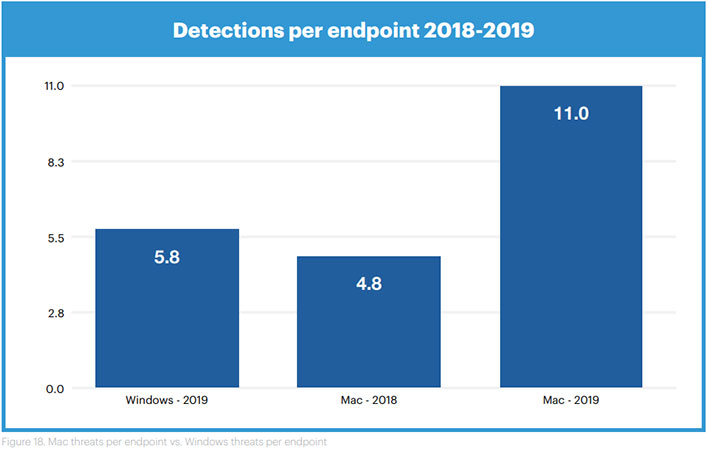
Source: Malwarebytes Labs
“The average number of threats detected
on a Mac is not only on the rise, but has surpassed
Windows—by a great deal. This is likely because, with
increasing market share in 2019, Macs became more
attractive targets to cybercriminals. In addition, macOS’
built-in security systems have not cracked down on
adware and PUPs to the same degree that they have
malware, leaving the door open for these borderline
programs to infiltrate,” Malwarebytes noted in its report.
It was not all adware. Cryptocurrency miners, backdoors, and traditional spyware crept into the Mac landscape as well. Out of those, malicious code identified as OSX.Generic.Suspicious topped the list. Malwarebytes also called to attention FakeFileOpener, which is designed to abuse and imitate legitimate macOS functionality to direct users to scam websites.
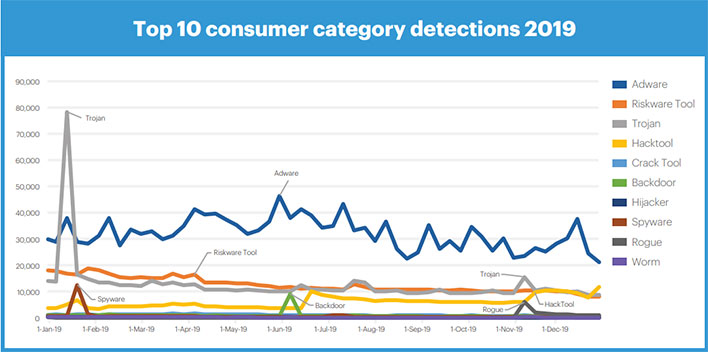
Source: Malwarebytes Labs
Of course, Windows has its fair share of malware problems. On the plus side, consumer infections dropped 2 percent in 2019, though businesses saw a 13 percent uptick. Overall, Windows-based malware went up a percentage point last year. Likewise, this was dominated by adware.
On Windows PCs, Malwarebytes Labs noted a surge in the hack tools category of infections. These types of infections increased 42 percent from the previous year, with nearly 1 million more infections in 2019 than in 2018.
“Hack tools are a
category of threats that are frequently used for hacking
into a computer or network. These tools may not be
malicious themselves, but they are capable of additional
intrusion, data collection, and dropping other malware
payloads. The sharp increase in hack tools detections
on consumer endpoints is concerning, and we’ll be
keeping a close watch on this category in early 2020 and
beyond,” Malwarebytes says.
‘).insertAfter(jQuery(‘#initdisqus’));
}
loadDisqus(jQuery(‘#initdisqus’), disqus_identifier, url);
}
else {
setTimeout(function () { disqusDefer(); }, 50);
}
}
disqusDefer();
function loadDisqus(source, identifier, url) {
if (jQuery(“#disqus_thread”).length) {
jQuery(“#disqus_thread”).remove();
}
jQuery(‘
‘).insertAfter(source);
if (window.DISQUS) {
DISQUS.reset({
reload: true,
config: function () {
this.page.identifier = identifier;
this.page.url = url;
}
});
} else {
//insert a wrapper in HTML after the relevant “show comments” link
disqus_identifier = identifier; //set the identifier argument
disqus_url = url; //set the permalink argument
//append the Disqus embed script to HTML
var dsq = document.createElement(‘script’); dsq.type = ‘text/javascript’; dsq.async = true;
dsq.src = ‘https://’ + disqus_shortname + ‘.disqus.com/embed.js’;
jQuery(‘head’).append(dsq);
}
jQuery(‘.show-disqus’).show();
source.hide();
};
function disqusEvent()
{
idleTime = 0;
}