

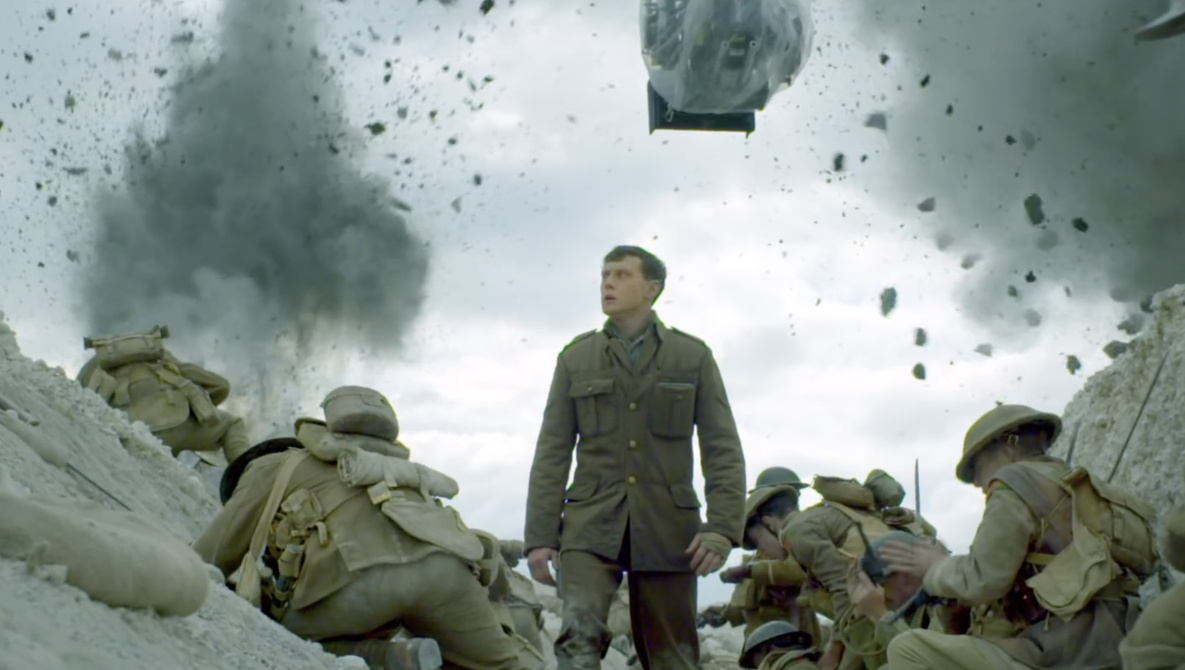
The long take has been a staple of film for decades, showing off a director’s capability at managing a set and camera movement. Some directors have been ambitious enough to create entire films using a “single shot,” which are really many shots cleverly stitched together to appear as one long, continuous take. But none have been as ambitious as Sam Mendes with his upcoming film, “1917.”
Set against the backdrop of the First World War, “1917” follows — literally — two young British soldiers on a mission to deliver intelligence that will thwart an attack. Director of Photography Roger Deakins takes the viewers into the the trenches, across the killing fields and on a visceral journey that looks sure to rival the immersive Omaha Beach landing of “Saving Private Ryan.”
This behind the scenes video gives viewers a glimpse into how Deakins and Mendes managed to pull off such an incredible feat of cinema, as we see the myriad ways the camera moves along with the two characters on their mission. It is carried by hand, on wires, on the back of trucks and by drone, sweeping across the European Theater to tell the story.
The film is made more difficult by it’s exterior nature, as the filmmakers constantly had to grapple with the ever-changing light of the environment, as they tried to match the light from shot to shot.
While the single, continuous shot can come across as a gimmick in some films, it is used here deliberately to make the viewer feel as if they are in the trenches with the two main characters. Seeing how they were able to capture the footage, literally handing off the camera to a moving vehicle, for instance, emphasizes how difficult it was to achieve this cinematic experience.
The film opens Jan. 10, 2020.
Do you think the single-shot style of the film will enhance or detract from the story? Drop a comment below and let us know what you think of this video.