

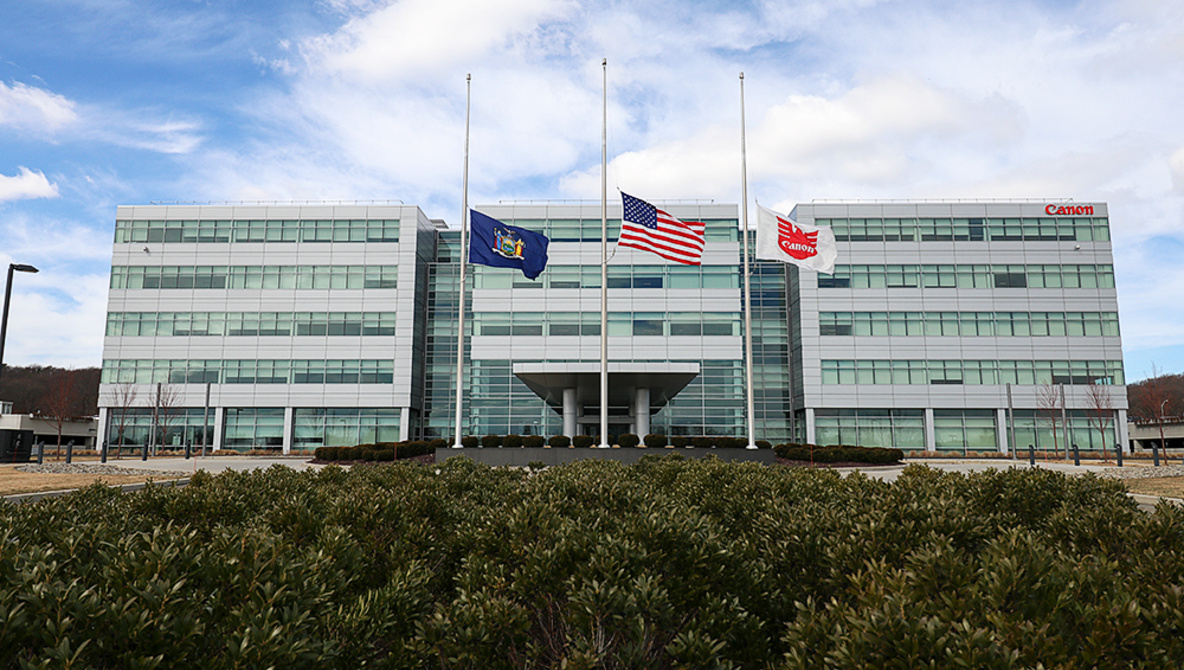
A recent round of layoffs at Canon’s USA headquarters in Melville and the closing of a major service center in New Jersey can’t mean good things for the company’s future in photography.
This is not to say that Canon’s going out of business. It is to say that in the years to come, photography may not be the core business of the company anymore. Most of the layoffs from a few weeks ago affected people in the company’s camera division, people with years of photographic know-how and knowledge of both EOS still and cinema cameras. The service center in Jamesburg, New Jersey provided quick service and easy access to repairs for a lot of photographers in the New York City area. Having to ship a camera for service where a customer could drive it before means longer wait times and generally worse service.
If one were to read the tea leaves, it seems like Canon is making a serious play to enter the realm of medical devices, hoping to apply its imaging prowess to a new area, though even here, there have been some strange developments. Canon founded Canon BioMedical in 2015, only to shut it down in 2019 because they acquired Toshiba Medical Systems in 2016 (Now Canon Medical Systems). This created redundancies across its company, and it seems like Canon is still trying to figure it out. This is not unlike the path Olympus has taken, with its focus on medical devices in addition to its photographic tools. This series of moves would suggest that this is the case.
Though the Canon name would live on this way, it would certainly be very different from what it is primarily known for today, which is photography. However, anything that makes the company profitable could at least keep the camera side going, a la Olympus, but it’s hard to see the commitment to cameras when many of the layoffs directly affect camera division employees and camera service/repairs for customers.
Canon’s competitor across the street, Nikon, laid off a number of professional reps as well in recent weeks, though the company isn’t as well-positioned in the medical fields to make a similar transition, if it needed it. It’s why the success of the company’s Z-series mirrorless cameras are all the more important for the company’s continued survival.
The other potential path for Canon is to accept that the company will not be as large as it once was. Nikon has always been the much smaller competitor to Canon, but has always kept a foothold in photography in the hearts and minds of photographers. Canon already has a lot of hearts and minds, and so it may not need to keep the floor space at HQ dedicated to it. It’s highly unlikely, and the company will likely not shrink without a fight, but it’s also a possibility.
If the two biggest camera manufacturers are struggling in this way, what do you think the future holds for Canon and Nikon DSLR cameras? Sound off in the comments below.