

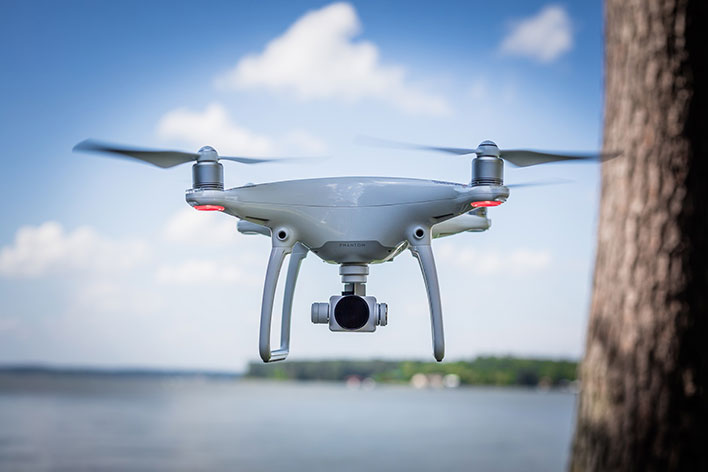
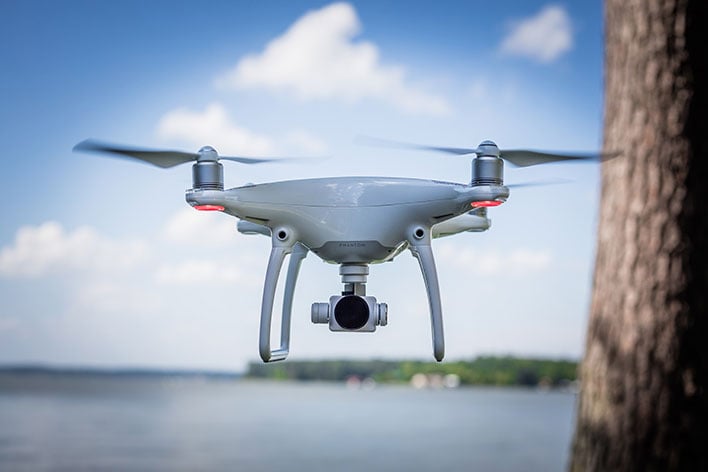
At issue here is that each of the drones is either made in China, or uses parts sourced from Chinese factories, according to what a “person familiar with the matter” told The Wall Street Journal. The apparent concern is one of national security—as tensions between the US and China continue to grow, it was decided to ground the drones while government officials perform a security audit of sorts.
The large fleet of drones is part of the US Department of the Interior’s Unmanned Aircraft Systems (UAS), which has employed aircraft in support of its missions for over 50 years.
“The goal of the DOI UAS program is to incorporate this new class of aircraft into DOI’s government-owned and commercially contracted aircraft fleet to support DOI missions for which UAS may be better suited than manned aircraft, achieving superior science, safety, savings,” the Interior Department explains.
Drones are used for a wide range of tasks, from fighting wildfires and monitoring endangered species, to search and rescue missions and surveying erosion, to name just a few. Most of it comes to a halt, however, under the order of Interior Secretary David Bernhardt, who grounded the fleet while the department performs a review of potential security risks from Chinese drones.
Department spokesperson Nick Goodwin said there will be exceptions for emergency situations—these would include natural disasters and when lives are at risk. It’s not clear if they will still be used to help fight wildfires, like the ones raging in Southern California right now.
DJI is based in Shenzhen, China, and makes more drones than any other company. In a statement provided to WSJ, the company said it is “disappointed to learn of this development,” and that it has “worked with the Department of Interior to create a safe and secure drone solution that meets their rigorous requirements.”
‘).insertAfter(jQuery(‘#initdisqus’));
}
loadDisqus(jQuery(‘#initdisqus’), disqus_identifier, url);
}
else {
setTimeout(function () { disqusDefer(); }, 50);
}
}
disqusDefer();
function loadDisqus(source, identifier, url) {
if (jQuery(“#disqus_thread”).length) {
jQuery(“#disqus_thread”).remove();
}
jQuery(‘
‘).insertAfter(source);
if (window.DISQUS) {
DISQUS.reset({
reload: true,
config: function () {
this.page.identifier = identifier;
this.page.url = url;
}
});
} else {
//insert a wrapper in HTML after the relevant “show comments” link
disqus_identifier = identifier; //set the identifier argument
disqus_url = url; //set the permalink argument
//append the Disqus embed script to HTML
var dsq = document.createElement(‘script’); dsq.type = ‘text/javascript’; dsq.async = true;
dsq.src = ‘https://’ + disqus_shortname + ‘.disqus.com/embed.js’;
jQuery(‘head’).append(dsq);
}
jQuery(‘.show-disqus’).show();
source.hide();
};
function disqusEvent()
{
idleTime = 0;
}