

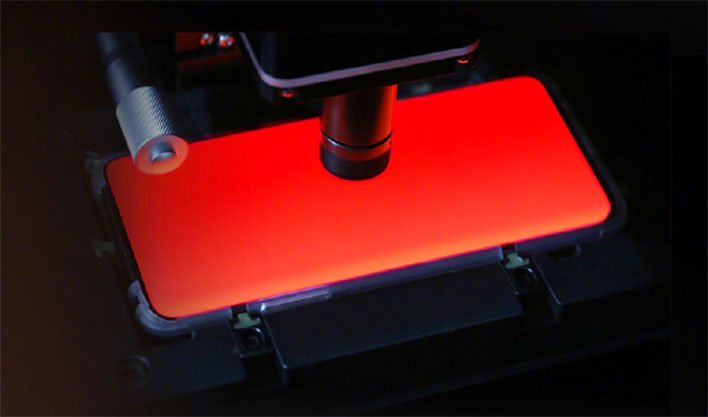
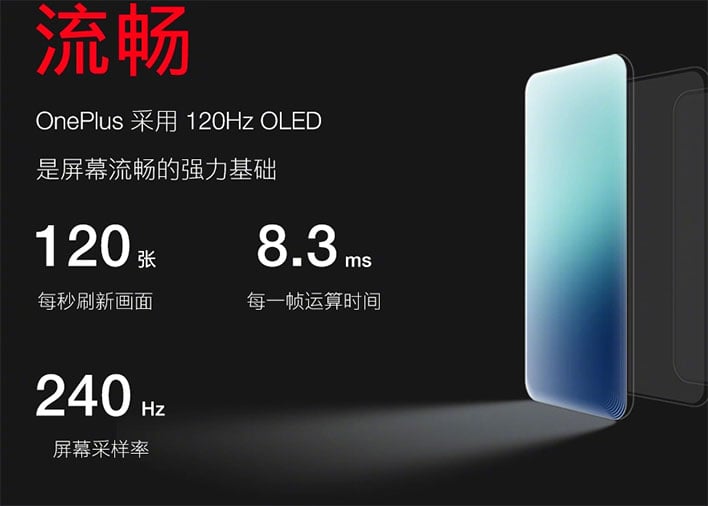
Lao shared a few preliminary details on Weibo. It’s all in Chinese, and lacking someone who reads and speaks the language, we have to rely on online translations. While some things might get lost in translation, the big takeaway is the use of a 120Hz panel on the OnePlus 8.
There is also mention of a 240Hz “screen sample rate.” That’s likely a reference to the touch sample rate, which is a frequency measurement of the touchscreen tracking the movement of a user’s finger. On a display with a 60Hz touch sample rate, the screen tracks a user’s movement in 16.3-millisecond. But at 120Hz, that is cut in half to 8.3 milliseconds.

Lau also shared a few slides detailing other bits about the screen, including the use of an MEMC (Motion Estimation, Motion Compensation) frame insertion technique. There is a dedicated chip inside the OnePlus 8 that is tasked with with converting videos recorded at lower framerates to 120 frames per second.
There is no concrete release date for the OnePlus 8, though we anticipate a formal launch in spring or summer.
‘).insertAfter(jQuery(‘#initdisqus’));
}
loadDisqus(jQuery(‘#initdisqus’), disqus_identifier, url);
}
else {
setTimeout(function () { disqusDefer(); }, 50);
}
}
disqusDefer();
function loadDisqus(source, identifier, url) {
if (jQuery(“#disqus_thread”).length) {
jQuery(“#disqus_thread”).remove();
}
jQuery(‘
‘).insertAfter(source);
if (window.DISQUS) {
DISQUS.reset({
reload: true,
config: function () {
this.page.identifier = identifier;
this.page.url = url;
}
});
} else {
//insert a wrapper in HTML after the relevant “show comments” link
disqus_identifier = identifier; //set the identifier argument
disqus_url = url; //set the permalink argument
//append the Disqus embed script to HTML
var dsq = document.createElement(‘script’); dsq.type = ‘text/javascript’; dsq.async = true;
dsq.src = ‘https://’ + disqus_shortname + ‘.disqus.com/embed.js’;
jQuery(‘head’).append(dsq);
}
jQuery(‘.show-disqus’).show();
source.hide();
};
function disqusEvent()
{
idleTime = 0;
}