

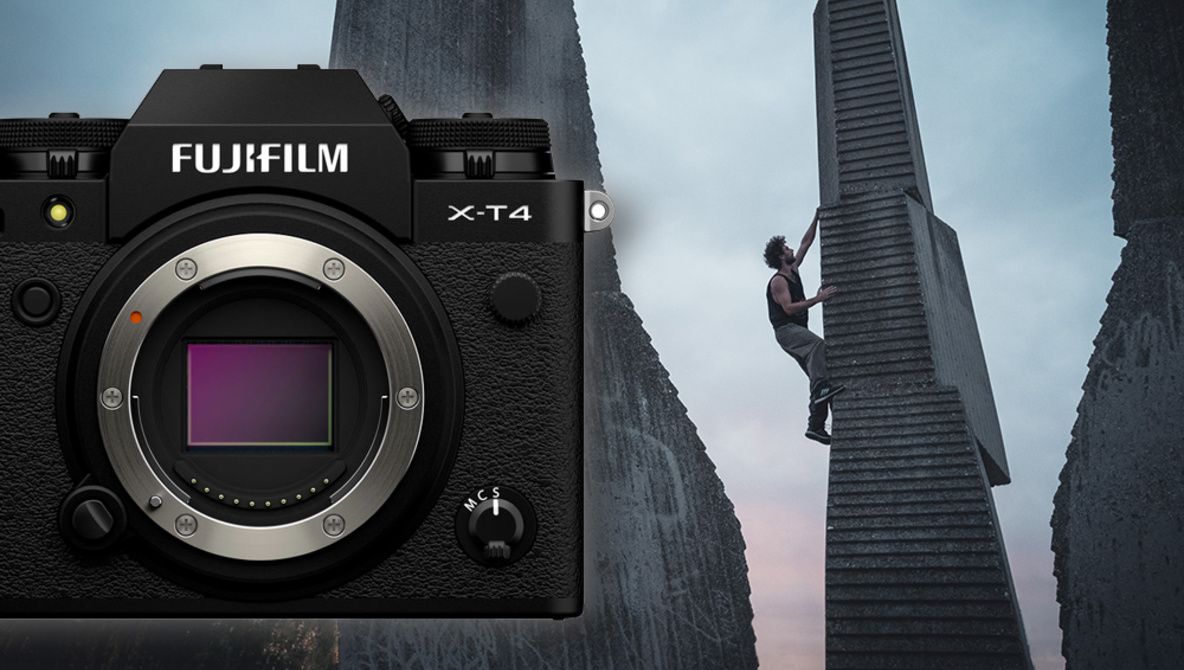
When pondering my move away from Canon almost 18 months ago, the two main contenders were Fujifilm and Sony. Despite the announcement of the incredible-looking X-T4, Fujifilm still hasn’t done enough to drag me on board, and it has nothing to do with sensor size.
When researching my upgrade options in late 2018, I knew I wanted to ditch DSLRs and take advantage of the more compact and feature-rich offerings of the world of mirrorless. Shooting a lot of sports, there were two obvious choices for my budget: the first was the Fujifilm X-T3, an APS-C sensor camera boasting 20 frames per second with its electronic shutter, and an equally impressive 11 frames per second with its mechanical shutter. Leaving full-frame sensors behind would be a little jarring, though this was more psychological rather than for any practical concerns. Low-light images might have suffered, but given how rarely anyone views my images at 100%, this would not be a huge issue.
The second option was the Sony a7 III, offering 10 fps with both mechanical and electronic shutters, and that full-frame sensor that was more about feeling “pro” than any real logic. However, it was when I came to research my lens options that I realized why moving to Fuji would be impossible.

The lens that has shot 90% of the images in my portfolio is the Canon 16-35mm f/2.8L, a piece of glass that I could adapt to the Sony a7 III, though this again wasn’t a decisive factor. Adapting glass has softened the blow of changing systems, but it wasn’t critical. Instead, it’s the fact that a 16-35mm f/2.8 equivalent simply doesn’t exist for Fuji, and it’s a hole in their lens lineup that for me is a gaping chasm.
A little more than a year after I decided that Fuji was not the right fit for me, along comes the X-T4. Let’s be honest: this thing looks incredible. It has all of the tactility and je ne sais quoi that the Sony lacks; while the a7 III has been something of a game-changer, it is an expensive box full of buttons designed by those who stare at spreadsheets and eat their lunch at their desks. Fujis, by comparison, are designed by people who love the process as much as the results, and understand that taking a photograph is much more than pulling a trigger.
For as long as most people can remember — and leaving aside RF glass — Canon has offered five full frame wide-angle zooms: the EF 8-15mm f/4L Fisheye, EF 11-24mm f/4L, EF 16-35mm f/2.8L, EF 16-35mm f/4L IS, and the EF 17-40mm f/4L. For my purposes, the fisheye is an overpriced novelty, and the 11-24mm is both too wide and too slow. The maximum aperture also rules out the 17-40mm.

In the middle, Canon has always offered two flavors of 16-35mm: the f/2.8 and the f/4. One is fast and heavy, and the other is not so fast, not so heavy, slightly cheaper, and has stabilization. Given my frequent need to freeze action in shoddy lighting conditions, the f/2.8 version has been essential, spending more time attached to my camera over the last 15 years than anything else. (Last year, I agonized over how to switch out my adapted Canon 16-35mm f/2.8, eventually choosing the Tamron 17-28mm. I had to compromise — both financially and to keep weight down — and decided that a few millimeters of reach was worth the sacrifice if I could keep a maximum aperture of f/2.8. So far, it’s been the right choice.)
When it comes to wide-angle zooms, Fujifilm’s offerings are much more limited. At the widest, there’s the XF 8-16mm f2.8, working out at 12-24mm when translated to full-frame — again, too wide for me. I stretch enough people’s faces, feet, and fingers already. More relevant is the XF 10-24mm f4 R OIS, effectively a 15-36mm lens, and like the Canon 16-35mm f/4, it comes with stabilization to make up for the lack of a wide maximum aperture.
The 10-24mm lens is the obvious counterpart, but for me, stabilization is useless. I’m shooting at speeds of 1/1,000th of a second and faster; if anything, I need a 10-24mm f/1.8 to compensate me for the reduction in sensor size — not stabilization.
As a result, Fujifilm’s X series of cameras is still let down slightly by the selection of lenses. Obviously, this is very specific to my photography, but if you’re an event shooter like me, a fast wide-angle zoom is a critical part of that much-discussed holy trinity of lenses, and I’m a bit confused as to why Fuji hasn’t plugged this gap. The X-T3 and X-T4 have proven that Fujifilm was right to stick with APS-C when offering a viable, more portable, and often more affordable alternative to full-frame mirrorless systems. With Canon’s APS-C range still teetering between EOS-M and the possibility of APS-C RF and Sony’s a6x00 range lacking the tactility and usability of the X cameras, you could argue that Fuji has very successfully carved something of a niche in a very crowded market.
Of course, this lens omission is not unique to Fujifilm. Some would argue that Canon’s EOS-M range of lenses barely draws comparison and Sony’s APS-C equivalent of the 16-35mm is again stuck at f/4, again compensated by stabilization. At least Fujifilm offers the very expensive 8-16mm f/2.8, though that does beg the question: if it can make a pricy 8-16mm with a fast maximum aperture, why doesn’t it do the same for its 10-24mm? Perhaps its simply too niche and consequently too expensive.
All of this fairly pointless chin-scratching has come about because Fujifilm has knocked it out of the park with the X-T4. The Gear Acquisition Syndrome is strong, and I crave that camera. Perhaps instead, I should be grateful that the lens doesn’t exist and be content with lusting from afar. Thank you, Fuji; your lens gap is a godsend.
No doubt, you’ll let me know your thoughts in the comments.