

Were you one of the early adopters who jumped to a Fuji X series, selling your extensive Canon camera body and lens range, to be thoroughly unimpressed with the image quality to then jump back? Or did you fork out on a PhaseONE medium format, drooling over that dreamy tonal range to then see Pentax release the rather good 645Z for a quarter of the price a year later? Enter the “Yesterday’s Tech” purchasing model.
We’ve all succumbed to GAS (gear acquisition syndrome) at some point in our photographic careers. In my alternate GAS-fueled life I identified four potential reasons for acquiescence.
Firstly, simply because it’s new and no one else has it. This is what is called “invidious consumption” which was developed by the nineteenth century economist Thorstein Veblen. He described it as the outwardly public “consumption” of goods in order to provoke envy in others and, let’s face it, it does feel pretty good to pick up that brand new EOS R at B&H, post the unboxing video on YouTube, before proudly walking down the street with it. And that’s before you’ve actually taken any pictures!

The second reason for GAS is because it solves a problem you don’t have. You were impressed by the high 20fps frame rate of the Sony a9 when it arrived on the scene and that camera remains game changing for sports photographers who work in a high octane genre and demand not only rapid fire imagery, but class leading focus tracking. Except you’re a landscape photographer and don’t actually need it!
Thirdly, the product you’ve bought actually doesn’t work! There is a whole heap of gear I could happily discard as rubbish that I shouldn’t have bought in the first place. Usually it’s lower cost items, but every so often you find a leading manufacturer who manages to produce something that really, well, shouldn’t have been released. I’m looking at you Nikon with the first release of SnapBridge. In fact, the golden rule of thumb for class leading kit under active development is to buy the third iteration. Think the Sony a7 or, indeed, Tesla.
Fourthly, unlike point three, it does work but is actually far too much effort to be worthwhile. You think you really want those raw files on your smartphone so buy a portable hotspot to transfer your images and then find it’s slow, fiddly and, at the end of the day, not really any better than taking a snapshot with your phone in the first place and editing it directly.
Of course invidious consumption is rarely based upon the actual manufacturing cost. There is an acquisition cost which is the manufacturers “charge” for being an early adopter. This is the price you pay for being able to use it before most other people. Where does the value of a product lie? If you are a professional photographer then this is determined by your operating profit, which you take after covering your costs. So if you factor in your new gear, depreciated over five years, does it pay for itself? Could a lower priced product perform equally well? It’s a bit like buying Walmart beans instead of Heinz (of course you might well be missing out on their 57 varieties!). The key question becomes this:
Does this piece of gear genuinely give me a competitive advantage?
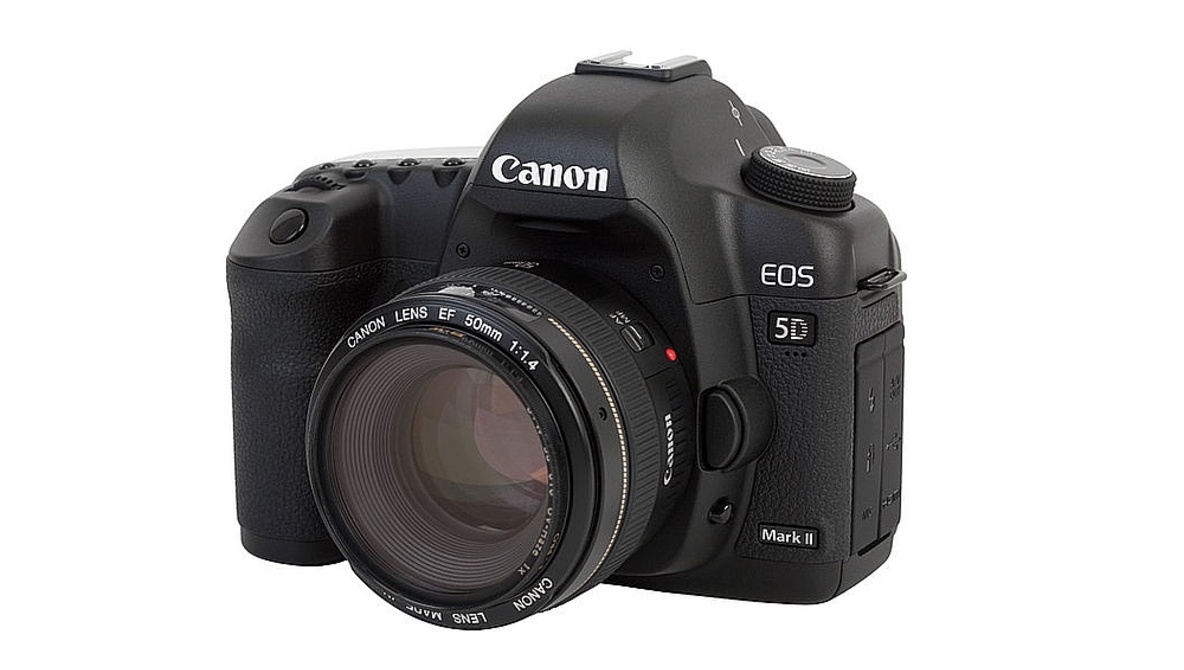
Some new products are a slow burn. Take the mirrorless camera. They’ve come a long way since the Epson RD1 (released in 2004) which cost $3000 and you’d have been hard pushed to pay for that in terms of competitive advantage, yet they have redefined the camera market. In contrast the Canon 5DMkII revolutionized independent film making. If you bought one of these, then you were able to create filmic quality videos. And that really could have paid for itself.
Whether a piece of gear is actually worth what you pay for it only you can determine. However the following exercise might allow you to gauge the sorts of successes you have had. Go through every piece of gear you have (and I mean every piece of gear!), then type the name, purchase date, and price in to a spreadsheet. It’s also worth adding the resale value (if there is one). Just adding up the total cost and resale value columns will be a salutary reminder of how much you have spent and what it is now worth. You could sort by purchase date to see how much you have spent each year and then review the last time you used each piece of gear.
The intention is not to beat yourself with a stick about buying gear, but rather to objectively assess whether your purchases are providing value for money. The “smell test” is whether you are actually using it. If not, sell it and assess any new potential purchases in the light of what you now consider to be gear that didn’t provide value for money.
While you are undertaking this exercise, why not write down the serial number and, If you have the receipt, take a picture of it. Why the serial number? This is a great way to do a stock check and value your gear. It then makes dealing with lost, stolen, or broken equipment so much easier.
When I went through this process for my gear, it showed me that I have a penchant for buying little gadgets and lenses, many of which are little used. Some of the gadgets include a right angle view finder, close-up lens, UV pass-through filter, Lee graduated filters, and a bargain reversing ring. Other more expensive items that don’t pass the smell test include an IR converted camera, Nikon 105mm f/2.8 macro lens, Nikon 24-85mm f/3.5-4.5 zoom, and Manfrotto carbon tripod.
What are used extensively include my aging Nikon D700, 70-200mm f/2.8, 85mm f/1.8, 50mm f/1.8, 35mm f/2, and 24mm f/2.8 lenses. Alongside these my Blackrapid Breathe strap, 3Pod travel tripod, Lee filter holder (and Super Stopper), and Fuji Instax SP2 printer all see extensive and regular use. Both the Sony RX100M2 and Fuji M1 cameras are used in conjunction to provide some extra latitude.
This list leads to my first general principle of photography:
Yesterday’s camera technology reliably delivers 95% of your photographic projects
I should moderate that principle by saying that while “yesterday’s tech” is often great, “last week’s tech” won’t necessarily be. Don’t worry about not being on the latest and greatest kit, but do know when to upgrade. As a business, where you can gain a competitive advantage, buy the latest gear that will deliver it.
Are you a “yesterday” tech user or do you buy the latest camera offerings? Does it deliver for you? What purchasing tips do you recommend?
Lead image in the Public Domain via Wikimedia. Copy image courtesy of Lucas Favre via Unsplash, used under Creative Commons.