

Having a new camera is exciting — playing around with settings and looking at the first results on your computer. It is very easy to set the exposure, and some basic settings are not difficult to find, but do you really take time to learn how your camera works?
Most people don’t buy a camera very often. That is understandable. These pieces of equipment are too expensive to buy very often, and you can go on taking pictures with a camera for many years, without the need for another one.
I was a salesman in a photography shop for over five years, and I sold a lot of cameras in my days. During that time, I learned that many people tend to buy a new one just before a holiday. That is probably the moment they realize their camera is not that good anymore, or they remember it broke the previous year.
But if you buy a camera a week before you go on that once-in-a-lifetime trip to a faraway land, you probably haven’t learned to use the camera. For most holiday photographers, it is not necessary to know a lot. Most of the people that I have sold a camera to prior to their holiday have used the automatic setting only. They don’t care about manual exposure, depth of field, or other specialized things. These people only care about a memory.
For us hobbyists and photographic enthusiasts, it is somewhat different. We love to play around with settings, and cool features of our new camera. Still, a lot of photographers haven’t mastered their amazing camera. When I am standing at an fjord with them, looking to the northern lights high in the sky, they sometimes struggle with some settings, because they never really learned to use their camera.
My Own Experiences With the Panasonic Lumix DC-GX9
Learning how your camera works sounds obvious. But it is not. Not to everyone, that is. It is more than being able to set an exposure, or some basic setting like white balance and file format. If you have any knowledge of photography, those are the things you can do without thinking.
It is much different with all those other settings. I know this from experience.
I have the opportunity to use a lot of different cameras for reviews. A few years ago, I was handed a Panasonic Lumix DC-GX9 camera, just one day before I went to Lofoten. I was asked to make a review. There was no time to study the camera and learn about the settings. It was my first Panasonic to review, so everything was completely new. On top of that, I had to switch between my Canon 5D Mark IV and the Panasonic many times. Although exposure and many basic settings were very similar, everything else was completely different.
If I had received the Lumix DC-GX9 only a week earlier, I could have learned about the settings and the many features and been able to play around with all the possibilities of that camera. Well, I managed to shoot a lot of nice pictures, but I think I could have done a better review if I had had some more time to learn how that camera worked.
A New Camera for This Year’s Trip to Lofoten
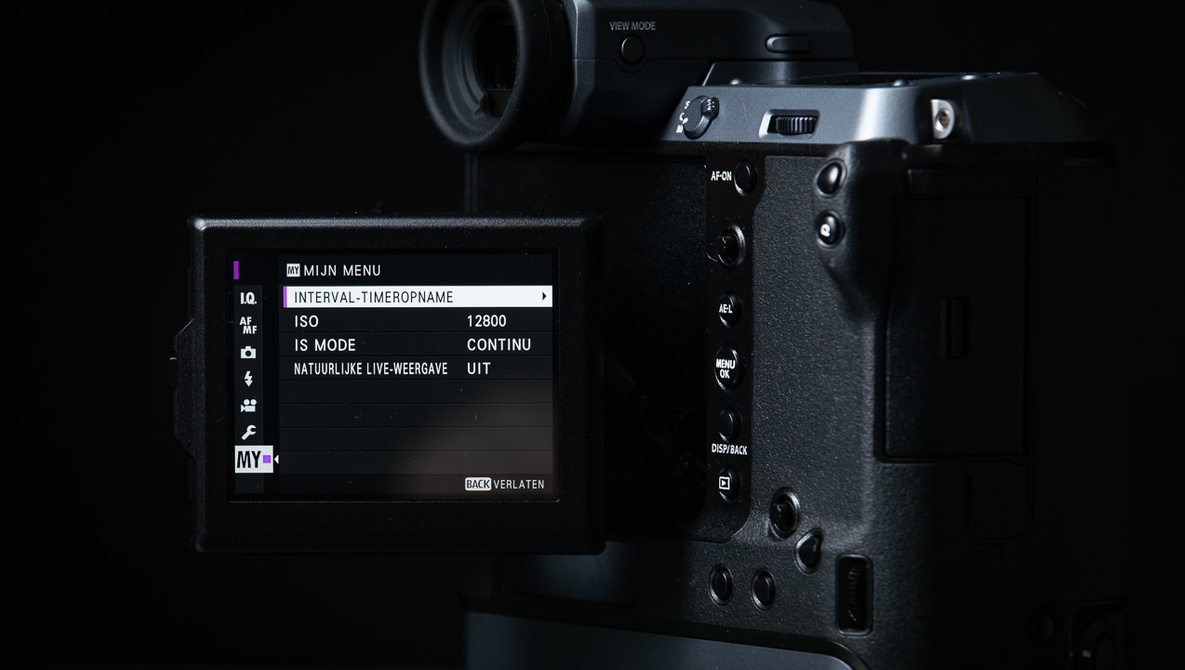
This year, I have another camera for the trip to Lofoten. I was handed a Fujifilm GFX 100 with a threesome of nice lenses. I have worked with Fujifilm before. I used the X-Pro2, GFX 50S, GFX 50R, and I have a X100T myself. Although Fujifilm cameras and the menu structure aren’t new to me, there were still some issues that I would have run into at Lofoten.
I have been photographing with the GFX 100 for a few weeks now. Setting up the camera for my personal preferences was no problem. But when I had arranged a model shoot, I did run into a few issues that I needed to solve.
First of all, because I wanted to use flash, I had to set the electronic viewfinder to ignore the exposure settings. One of the amazing things of an electronic viewfinder is the ability to preview the exposure settings. But that won’t work when using flash. It is also a setting that I would love to change for night sky photography at Lofoten. I had found that setting already, or so I thought. But it turned out to be a completely different setting, one that I had overlooked.
The second problem I ran into was a bit more serious. When we changed locations, I had placed the camera inside my camera bag. When I took it out again, the shutter dial seemed to be locked somehow. And there was no indication of how to unlock it again.
I tried a lot of buttons and a combination of buttons, but I could not find it. After some research on the internet with my smartphone, I finally found the right button. It took me about 20 minutes, which was no problem at that time. But that would be enough to miss a burst of northern lights at Lofoten.
The Lesson Learned
These two examples show how important it is to learn to use the camera before you go on holiday or before you start to shoot at a location that will be a once-in-a-lifetime thing. Learn where to find the different settings in the menu and where to change certain behavior of the camera. If you have customized your camera extensively, learn how and where to change it if necessary. You might think you will never need to do that again after the first setup, knowing all the things you’ll ever need are under customized buttons and personalized menus. But when a camera is resetting itself for some reason or you have upgraded the firmware prior to an important shoot, which isn’t that smart to do, it can be quite frustrating or even reason to panic.
I have seen the latter a lot, especially with the of Sony cameras. It is really because of its wonderful customization capabilities. Photographers tend to rely on this customization so much that they start to panic when something goes wrong. And believe me, it always happens at the wrong time.
But this also applies to the other brands. After all, the modern camera is a complex piece of machinery with a lot of amazing functionalities. It would be a shame if you only used the basics of something that is capable of so much more.
My Advice for All Photographers
This is my advice for every photographer around. If you haven’t done so already, please learn how your camera works, so you don’t have to think twice about finding some setting. Use the customization capabilities and personalized menus, but also know what to do when you suddenly are in need of the functionality you never needed before.
And perhaps you are searching for a setting that doesn’t even exist in your type of camera. That is something I have also seen happen before. So, learn how your camera works, and you will have more time to enjoy your photography.
Have you ever run into a situation where you couldn’t find the setting you needed? Please share your thoughts and experience in a comment below.