



By now, enthusiasts know the benefits of the PCIe 4.0 interface, especially when it comes to solid state drives (SSDs). For the past six months, we’ve seen a number of manufacturers release PCIe 4.0 SSDs that can reach up to 5GB/sec sequential reads and 4.4GB/s sequential writes.
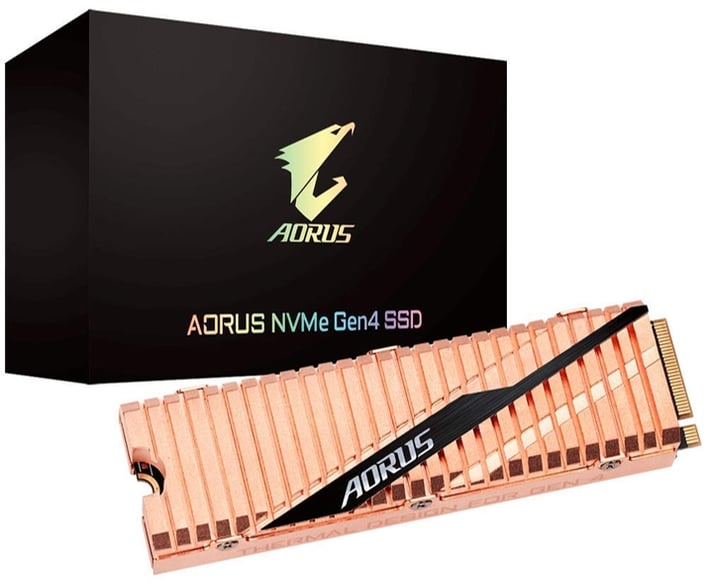
One of the first manufacturers to jump onboard was Gigabyte with its AORUS NVMe Gen4 SSD using a Phison controller. Today, however, we got to see first-hand how Gigabyte has tuned its Aorus Gen4 AIC Adaptor to achieve even higher performance in 4-way RAID. Back in late May, Gigabyte was hitting speeds of 15GB/s with four of its PCIe SSD in a RAID-0 array using the AIC Adaptor. Now, however, the company is touting speeds that surpass 19GB/sec, which is truly jaw-dropping.

All of this was of course done using AMD‘s latest third-generation Ryzen 3000 processors and one of Gigabyte’s own X570 motherboards. For those not in the know, X570 is currently the only general consumer-level motherboard platform capable of supporting PCIe 4.0.
In the picture above, you can see the Aorus Gen4 AIC Adaptor just below the liquid-cooled graphics card in Gigabyte’s custom rig. The add-in card has four internal PCIe 4.0/3.0 M.2 slots and runs custom Aorus Storage Manager software. It fits into an available PCIe 4.0 slot and includes its own blower-style cooling fan to keep all of those high-performance SSDs cool under load.

The Aorus Gen4 AIC Adaptor is priced at $149 via Newegg, while the Aorus NVMe Gen4 SSD is available in 500GB, 1TB, and 2TB capacities priced at $151.99, $245, and $423.99 respectively at Amazon.
‘).insertAfter(jQuery(‘#initdisqus’));
}
loadDisqus(jQuery(‘#initdisqus’), disqus_identifier, url);
}
else {
setTimeout(function () { disqusDefer(); }, 50);
}
}
disqusDefer();
function loadDisqus(source, identifier, url) {
if (jQuery(“#disqus_thread”).length) {
jQuery(“#disqus_thread”).remove();
}
jQuery(‘
‘).insertAfter(source);
if (window.DISQUS) {
DISQUS.reset({
reload: true,
config: function () {
this.page.identifier = identifier;
this.page.url = url;
}
});
} else {
//insert a wrapper in HTML after the relevant “show comments” link
disqus_identifier = identifier; //set the identifier argument
disqus_url = url; //set the permalink argument
//append the Disqus embed script to HTML
var dsq = document.createElement(‘script’); dsq.type = ‘text/javascript’; dsq.async = true;
dsq.src = ‘https://’ + disqus_shortname + ‘.disqus.com/embed.js’;
jQuery(‘head’).append(dsq);
}
jQuery(‘.show-disqus’).show();
source.hide();
};
function disqusEvent()
{
idleTime = 0;
}