

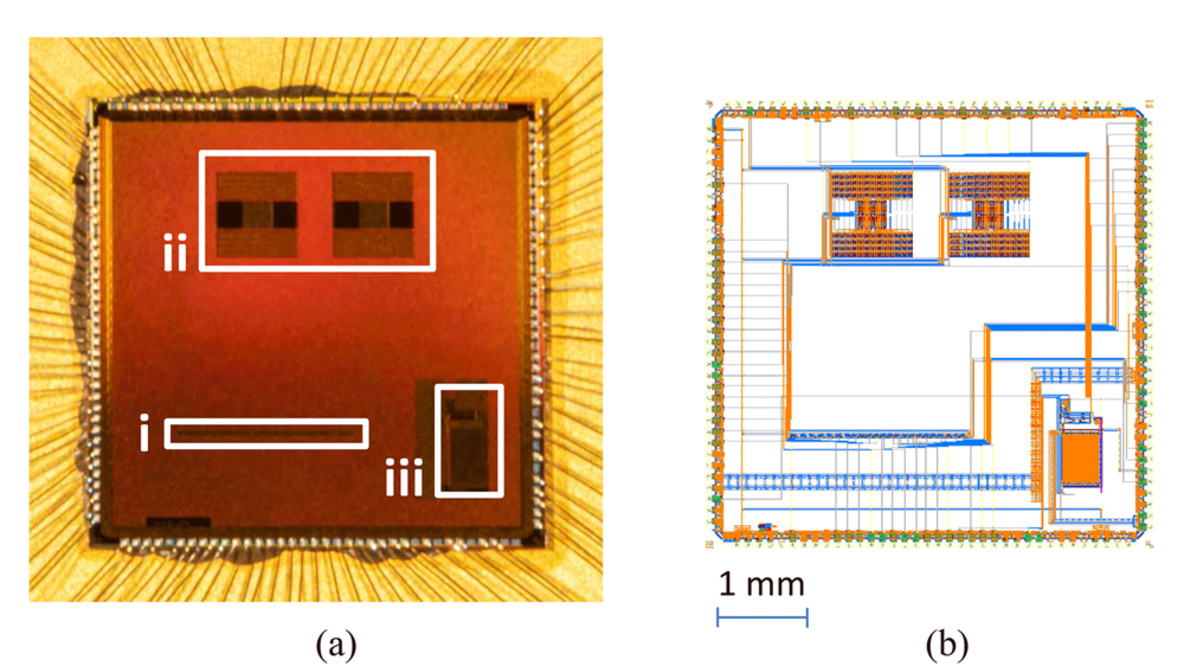
Researchers have developed a new pixel design that has the potential to revolutionize dynamic range in cameras.
The design is referred to as a “self-resetting pixel.” Currently, when a pixel hits the limit of its exposure (becomes saturated), it clips, placing a hard upper limit on highlight capture. This is what we see as clipped highlights in images.
The new pixel design obviates this problem by resetting itself. In other words, when a pixel reaches its well capacity, it resets and begins counting again. It also contains a conventional ADC, which allows it to measure the charge after the last reset at the end of the exposure. From there, the total exposure is simply the number of resets multiplied by the well capacity plus the remaining charge measured by the ADC. In principle, this removes any upper limit on dynamic range, meaning one could expose for shadows or their subject without ever worrying about blowing highlights.
That being said, while the technology is certainly exciting, it still has some hurdles to overcome and is currently being developed for industrial applications. Most notably, the extra circuitry takes up a lot of space, thus decreasing the light-sensitive area of each pixel by a notable amount. Still, it’s a promising step forward that could represent huge gains in the future. You can read the full paper here.