

Camera manufacturers are keenly aware of how much photographers love their gear and in particular, how much they love extreme gear. As lenses continue to push below f/1 apertures and ISO capabilities skyrocket towards seven-digit figures, is the next major specs war going to be making the first mainstream consumer camera that can shoot gigapixel (1,000 megapixel) photos?
I always think of the famous “the numbers all go to 11” scene from “Spinal Tap” when I think about photography gear. The truth is that a lot of us (from doe-eyed neophytes to seasoned professionals) love the nerdy side of gear. We love seeing the new extremes that manufacturers can push cameras and lenses to, and we are more than willing to pay for the privilege of using the latest and greatest a lot of the time.
Previous Wars
This article is not intended to get into the age-old debate about if such gear is really needed (and I mean, if you can afford it and you enjoy it, go crazy). Rather, I mention this to acknowledge that this sort of chasing of extremes is very much a part of photography culture. Manufacturers are aware of this, and we have seen various arms races and status symbol releases throughout the years that fed into the frenzy. Here are some of the examples that come to mind:
- The Canon 50mm f/1.0L USM: This lens came out in 1989, and it is so legendary over three decades later that it still sells for about twice the price it went for new. I mean, just look at that figure: f/1. It instantly attracts your eye and conjures images of insanely shallow depth of field and low-light capabilities, the sort of bragging rights that will make all your photography friends drool with envy. I think Canon knew this, and that’s why they aimed for that round figure instead of f/1.1, which would have still had bragging rights as the widest autofocus SLR lens in production at the time. “f/1” stops you in your tracks. The lens never sold much, was not practical in the slightest, and was not even that sharp, particularly wide open. But it gave Canon bragging rights to the widest autofocus SLR lens in the world at the time, and the lens still holds that title. Fujifilm is planning to eventually release an X mount 50mm f/1 mirrorless lens, but the Canon will remain the only full frame autofocus lens at that aperture.

Anyone want to buy me one of these? (Photo by Wikipedia user Tt mt6, used under Creative Commons.)
- The Sony a7S and Nikon D5: The Sony a7S and Nikon D5 turned the specs war toward high ISO values. When announced in 2014, the Sony a7S (and the Nikon D4s) pushed their upper ISO limits to an unheard of 409,600. And what’s more, the a7S actually looked relatively good at that level, thanks to its unique low-resolution 12.2-megapixel sensor that allowed lots of light-gathering capabilities alongside Sony’s already great sensor tech. Then came the Nikon D5, which pushed max ISO to a ludicrous 3,276,800. That top ISO was more of a party trick than the a7S’ 409,600, but it still generated a lot of hype. It now seems that we are starting to bump up against the limits of silicon and sensor design, and it is likely going to take a major step forward in technological development before we see a true quantum leap in ISO performance, but that’s a different discussion.
- Megapixels War: Perhaps no specs arms race was more notable than the megapixel wars. In the early years of DSLRs, the focus was simply on putting out cameras that produced image quality comparable to that of film. Once digital’s dominance was established, the resolution race was on. After all, in those days (and still to this day to the uninitiated), a camera’s megapixel count was a measure of its quality. It also had very practical consequences; after all, the difference in what you can do with a 10-megapixel file versus a 3-megapixel image is enormous. However, the war continued past that. Notable latter mainstream models (as opposed to very high-level medium format) include the Canon 1Ds Mark III (21 megapixels, announced in 2007), Nikon D800 (36 megapixels, announced in 2012), Sony a7R (36 megapixels, announced in 2013), Canon 5DS and 5DS R (50 megapixels, announced in 2015), and Fuji GFX100 (100 megapixels, announced in 2018).
We Already Have a Ton of Megapixels
However, in the last year or so, I have noticed another camera spec suddenly exploding into uncharted territory: multi-exposure resolution. Manufacturers have all sorts of different names for this, but the fundamental idea is leveraging a camera with in-body image stabilization by shifting the sensor in very small, precise amounts to generate extra-high-resolution files.

You’ll soon be able to take 400-megapixel photos with this camera.
Let’s look at the current top resolutions at which the various manufacturers top out:
- Canon: Canon does not have a camera with this sort of technology at the moment, so their current resolution champ remains the 5DS and 5DS R at 50.6 megapixels.
- Nikon: Nikon does not have it either, so the D850 and Z 7 hold the current title at 45.7 MP.
- Sony: The a7R IV uses the company’s Pixel Shift technology to produce files at a whopping 240.8 MP.
- Panasonic: The S1R‘s Sensor Shift mode produces 187-megapixel images.
- Leica: The SL2 also produces 187-megapixel images.
- Olympus: The company’s Hi-Res Mode tops out at 80 megapixels on several models.
- Fuji: The GFX100 currently sits at 102 MP, but the company recently announced the forthcoming addition of a pixel shift mode that will output absolutely astounding 400-megapixel files.
- Pentax: Pentax tops out at 36 MP.
- Hasselblad: The H6D-400c uses Multi-Shift technology to output gigantic 400-megapixel files.
- Phase One: The XF IQ4 takes the native resolution crown at 150 megapixels.
This is sort of technology has exploded in the last few years mostly due to the rise of mirrorless cameras, as the IBIS tech that enables this functionality is mostly found on mirrorless bodies.
Is the Gigapixel Next?
This all brings me to the golden questions: will the gigapixel photo mode be the next major specs war and when will we see it?
Certainly, the overwhelming majority of photographers will never need anything remotely near that amount of resolution, and in fact, it would be a royal pain in the neck to work with, certain to bring computers to their knees. Sure, there would be a few niche uses when it would actually come in handy — museums cataloging priceless works of art, for example, but on the whole, no one would ever need it.
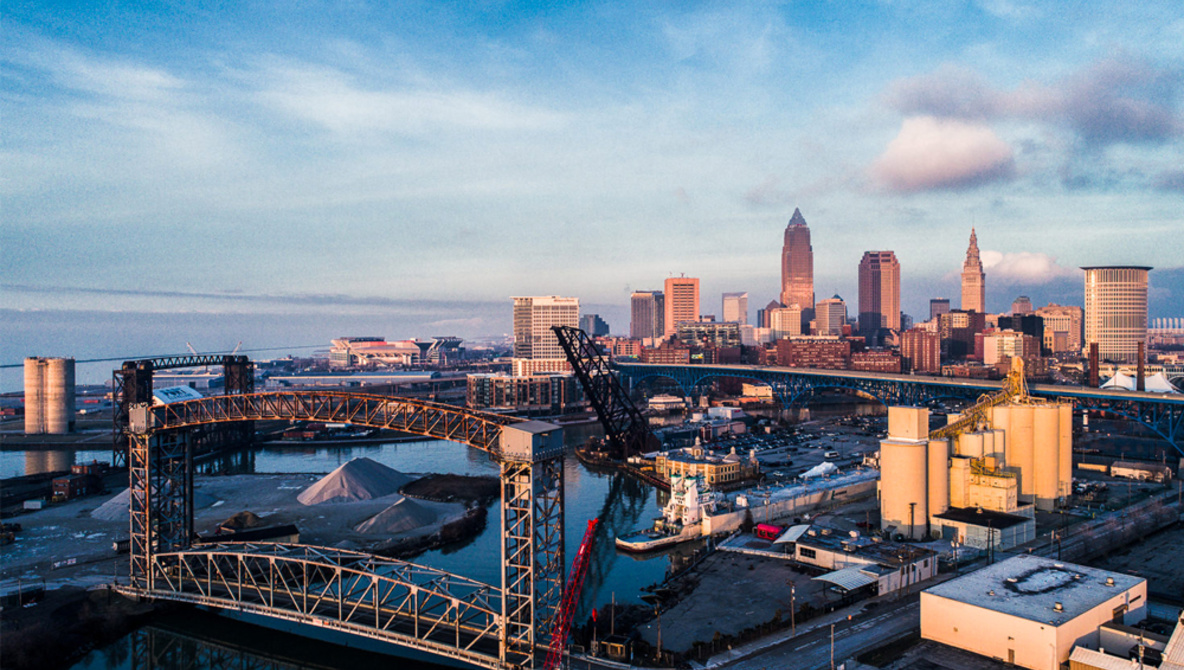
However, it’s not about need. It’s about bragging rights and the thrill of being on the literal next order of magnitude. Did anyone really need an f/1 lens? Does anyone ever use ISO 3,276,800? The point is that “gigapixel” rolls off the tongue like “f/1” does. It instantly stimulates the imagination and the salivary glands, as photographers dream of enormous files capable of endless zooming and wonder if they can empty their bank accounts while their spouses are asleep. Doesn’t the photographer in you get at least a little excited at the thought of looking at a 1,000-megapixel image of a skyline and zooming in to see every individual building, every individual window, every… individual? It’s not practical in the slightest, but oh my goodness, would it be fun to have.

Enhance. Enhance. Enhance.
Of course, there are some not-so-minor issues to getting there. As mentioned, it would take a lot of computing power to handle such a file, but then again, if you’re the type of photographer to buy such a stratospheric (and currently hypothetical) camera, you probably have a top-of-the-line computer to match. The next issue is having lenses that can actually deliver at those levels. I don’t think that’s impossible. Lines like Canon RF, Fuji GF, Schneider, and more continue to push professional glass into the next generation.
The last issue is having a sensor with the proper native resolution to do this. You might have noticed that all these technologies produce images that are quadruple the resolution of the native sensor resolution, meaning using current techniques, a 250-megapixel sensor would be needed to produce a gigapixel file. Currently, both the Phase One XF IQ4 and GFX100 have a pixel pitch of 3.76 microns, with the XF IQ4 using a 53.4mm by 40.0mm sensor and the GFX100 using a 43.8 by 32.9mm sensor. Getting to 250 megapixels would require a pixel pitch of about 2.92 microns on the Phase One sensor or 2.4 microns on the Fuji. For reference, getting there on a full frame sensor would require a pixel pitch of about 1.86 microns.
This isn’t unheard of. Cameras with smaller pixel pitches exist. Canon has been playing with a 250-megapixel APS-H (1.3x crop factor, even smaller than full frame) sensor for a while now. While that has yet to make its way into a consumer camera (and it’s unclear if it ever will), the company has proven that they can make the tech work.
Conclusion
Just the term “gigapixel” generates excitement. And as manufacturers continue to look for new bragging rights, could the next frontier in resolution be the spec they chase? Would you ever consider buying a camera capable of shooting 1,000-megapixel images? Would you have any use for it, or would it be purely for the geeky fun of it?