

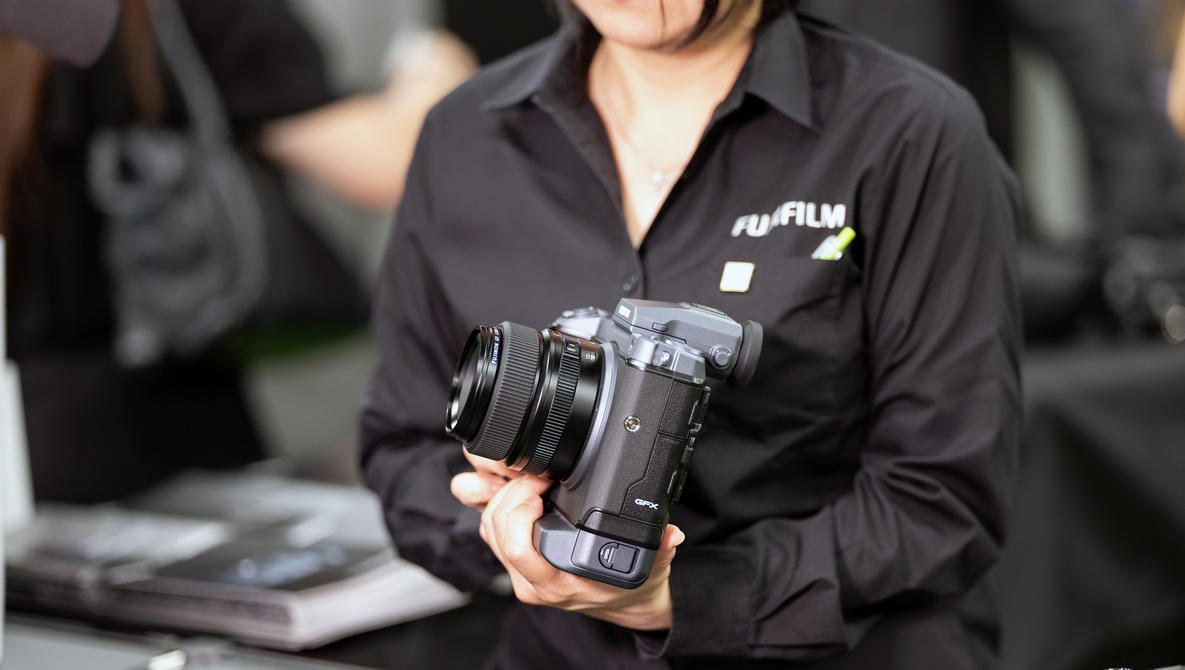
The love for mirrorless bodies and pancake lenses is bottomless, but what about heavier setups? I can’t be alone in my appreciation of them, surely.
For the record, my most used camera for the last year is an a7 III with either a 24-70mm or my beloved 135mm on the front. But my decision to buy that camera had absolutely nothing to do with its size. In fact, I was even a touch put off by its slightness, but the features were great, and so, it became my workhorse. But every lens and camera review will talk about weight — as they should — but always from one perspective: lighter is better.
I get it, I do. I often have to shoot for eight hours straight; I’ve even had to shoot for 12 hours or more. It’s far more physically challenging than people appreciate. I also follow a similar approach to “the lighter, the better” philosophy when I pack my camera bag. I try to take as few lenses, bodies, and accessories as I can get away with. Lugging tons of camera equipment around on your back or shoulder is not fun and can even be damaging long-term. So, why the hell would I prefer heavier cameras and lenses? It’s difficult to explain, but I’ll unpack it as best I can.
When I first got into photography I had a very small APS-C camera body and a terribly fragile kit zoom lens, with a nifty fifty as backup. It was light, it was small (for the time), and it was easy to leave hanging around your neck. I didn’t even think to stray away from that run-and-gun style setup until a number of years later, when Zeiss reached out to me to give one of their new lenses a whirl. It was the Otus 28mm f/1.4, and my word, was it jarring. It arrived in a war chest, weighed more than most of my equipment combined, and it felt as if it could be flung from a high-rise and the only damage sustained would be to the concrete below (do not test this theory).
The stunning Zeiss wide-angle lens as delivered to me in its white coffin.
The build quality on this thing was staggering. The metal barrel, the girth, the giant front element, and the big rubber focus ring that moved smoothly and silently; it was a great experience and a lesson in supreme quality. It was a little like when you sit in your first luxury car or inspect your first high-end watch. You didn’t really appreciate the gulf between what you have and what the other half have until it’s right there in front of you. Nevertheless, I hadn’t drawn a connection between the inherent weight that came with quality (most of the time, anyway) and my enjoyment of using it. Until, that is, Fujifilm was kind enough to fly me to Tokyo for their launch event of the GFX 100 at Fujikina 2019. Only then did I make the connection and begin to flesh out why.
It isn’t just that traditionally speaking, weight is a hallmark of quality with products; it’s deeper than that. In Tokyo, I was shooting with either the GFX 100 or the GFX 50R and always paired with one of the loves of my life: the GF 110mm f/2 R LM WR. My usual setup runs at around 1 kg (or 2.2 lbs), whereas with this, I was lugging around a setup that was 2.4 kg (or 5.3 lbs). I am not a large person, nor am I particularly strong, so this represented a significant ramp up in weight and bulkiness. And I loved it.
Even if I shoot an incredible image with my mobile phone, I don’t enjoy the experience. I don’t feel I’m plying a skill or engaged with the moment, but with the medium format Fuji and a lens that weighs 1 kg/2.2 lbs on its own, I did. I had that camera in my hands for days on end as I walked miles and miles around Tokyo, taking several thousand images. The tactile experience gave me a similar sensation to what I have felt when shooting on different film bodies: you’re involved and everything is markedly more satisfying.
Handheld shots from the top of Tokyo Tower at night.
This isn’t a criticism of lighter equipment per se, nor is it to say that people who prefer lighter equipment are wrong. Instead, it’s an observation that while high weight relative to the item’s function is always treated as a negative, it isn’t uniformly negative for everyone. I enjoy shooting with my Sony mirrorless, but my enjoyment is derived primarily from the results and seeing the images I create on the back screen. I can say unambiguously and with complete certainty that my time with the two GFX bodies and the 110mm on the front was the most fun and engaging time I’ve had in photography for many, many years. I had a rare and immediate connection with my equipment.
I would be up and out every morning early, I would do whatever Fuji had planned for me all day — with the camera in hand — and then I’d forgo a taxi back to my hotel in preference of walking for several hours across the districts. I would return to the room with blisters on my feet, chafed redness on the back of my neck, and strap marks on my shoulders, and I couldn’t care less. If all I had to do was sacrifice a little comfort and ease to gain a sense of engagement with my craft and the feeling that I was utilizing a powerful tool, then I was and still am happy to make that sacrifice.
Am I weird? (Please keep your answer strictly within the confines of the article’s question!) Do you prefer shooting with heavier equipment? Share your thoughts in the comments below.