

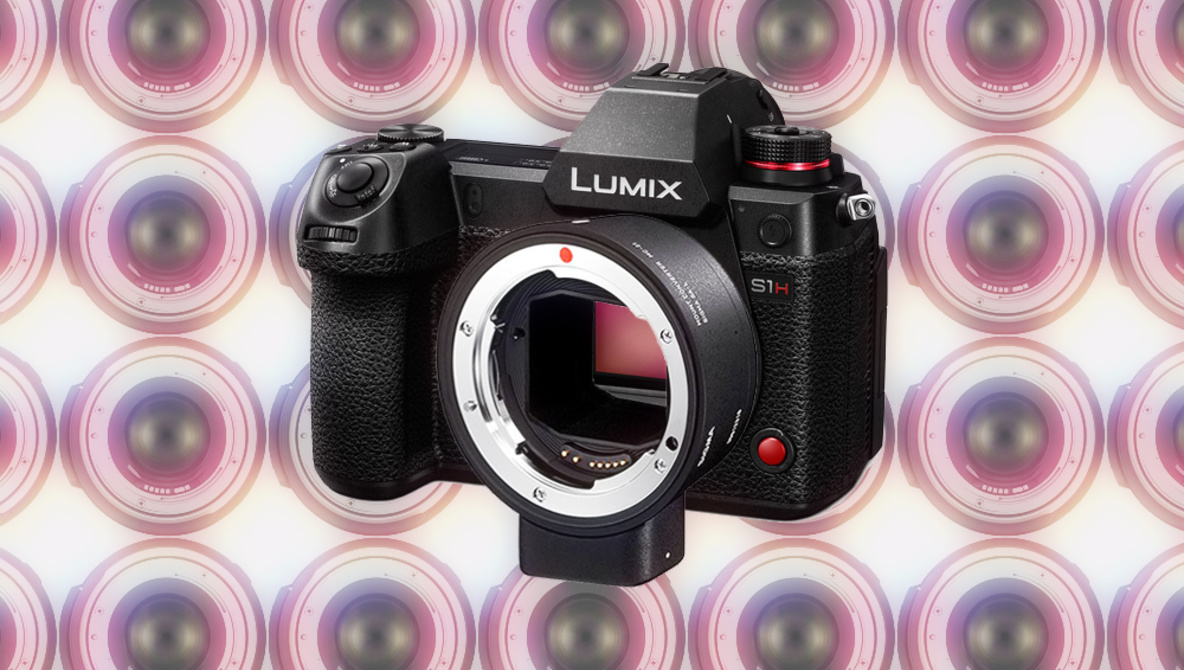
The GH5 was a huge success for Panasonic and consumers, but the stakes are much higher now. What will prevent Panasonic from being overtaken?
In short, I want to talk about how Panasonic needs to make proper L-mount adapters, so they can attract users to their camera line up without needing to commit to the Leica L mount. So far they’ve made huge advances with the S1, S1R, and S1H. However their lens solutions are still lackluster. Why add friction?
Step 1 of 1: Convert Users to Your System
Right now, you can shell out thousands for Panasonic’s new L-mount lenses, or pick up an adaptor. The first option is prohibitively expensive for prosumers, as well as an untested and risky investment for pros.
Unfortunately the second option hasn’t been properly figured out yet. Panasonic has relied on Sigma to make an EF to L adapter, but it unfortunately leaves room for improvement. Sigma’s MC-21 doesn’t seem to match the advancements made for E-mount adaptors, which was part of Sony’s full frame success. It doesn’t allow for continuous auto-focus, can’t be updated without a dock, and only officially supports Sigma glass.
Without improvement, I’m not sure pros are going to take the leap and support Panasonic’s $4,000 S1H. Check out the MC-21’s reviews on Amazon and B&H – for some it’s fine, but that’s not good enough.
I hope that Panasonic takes a leaf out of Canon’s book, and makes their own adapter. Canon made a suite of adaptors to convert EF to their new mirrorless RF mount. Here’s what I’d like to see from that:
- Compatibility with a wider set of lenses, not just guaranteed compatibility with (some of) Sigma’s own glass.
- Full auto-focus compatibility.
- The ability to use both the lens IS and the IBIS within the camera, for full 5-axis stabilization.
- And if they really want the pro-video market, built in filters between the lens and the sensor, or a locking adaptor.
Canon Versus Everybody Else
Canon seems to have done this all correctly. So wonderfully, that RED is supporting the new system in their upcoming micro cinema camera. That’s a pretty stellar seal of approval. What’s happening here though, is that Canon are cannibalizing their new lenses a little.
If you’re running a video production company, and have been tasked with buying some new glass. Would you invest in Canon’s RF mount lenses? Of course not, because even if you need to use that mount, you know that Canon has made reliable and useful adaptors for their ever-popular EF mount. Remember, Canon’s EF lenses are among the most purchased and rented around. It’s in their best interest to keep that popularity going.
Now look at Panasonic. Their EVA-1 camera uses Canon’s EF mount, and their higher end Varicam uses PL mounts. Previously Panasonic took a bit of a chance on micro-four-thirds, and it paid off. Their own Micro Four Thirds lenses sell for a pretty penny, and support an entire ecosystem for their Micro Four Thirds cameras.
Panasonic is trying to re-create what they did with Micro Four Thirds. Unfortunately, I think they’re going to get their lunch eaten. While the S1, S1R, and S1H are killer cameras, I think they’ve overestimated their market. The GH5‘s success was ultimately pushed forward by a top-notch suite of adaptors by Metabones, which brought the cost of switching down significantly.
Part of me worries that Panasonic has locked themselves into a deal with Sigma. If I was running Sigma, I wouldn’t want Panasonic to make their own Canon-esque adaptors. It would mean more users could use other lenses, and ruin the whole “buy Sigma with the new Panasonic cameras” marketing that’s been going on recently.
What Could Happen
Canon just announced the C500 Mark II. What’s significant is that it uses the new CF Express cards, and needs them to record massive data. You can now pre-order the cards.
Do you think that no other camera manufacturers have thought about using CF Express? If there’s an a7s III around the corner, there’s every chance that it will support CF Express (Sony did get behind it’s predecessor, the XQD card, before dropping it last year). Within the next year, the S1H is going to have some very serious competition, and the friction that Panasonic have put in place puts them at a significant disadvantage.
If neither Panasonic, Metabones, or Sigma, make a better suite of adaptors, then the S1H won’t stand a chance against the competition. However, if Metabones creates an adaptor that works perfectly, then Sigma loses out. It’s a tricky game for Panasonic, and one that ultimately hurts the consumer.
If Panasonic truly wants the perfect hybrid between a classic mirrorless and cinema camera, they’d better change something.