

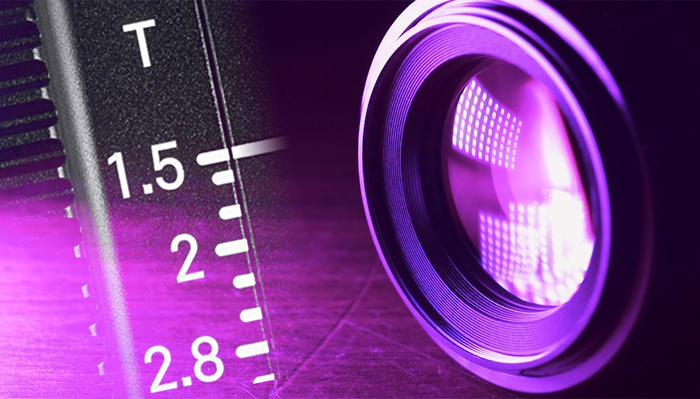
You may have heard of t-stops before, but what exactly are they and why do only some lenses use them?
In this video, Gerald Undone explains how to calculate f-stops and t-stops, as well as how they are relevant to each other. Interestingly, while they can seem very similar on the surface and even have number values that are alike, their application and usefulness don’t exactly overlap.
T-stops are much more common in filmmaking than photography because matching the exact exposure between multiple lenses used in a scene creates harmony. In photography, this kind of perfect exposure matching is usually not greatly important looking at one still image and moving to the next. One is not really better or worse than the other, but each has their purpose to assist the creator with what needs to be accomplished. In exchange for not knowing the specific light transmittance in a regular photography lens, the f-stop number does give a better understanding of depth of field.
As the video explains, f-stop and t-stop numbers are fairly alike, and that gives an added bonus to using t-stops since one can usually guess the equivalent f-stop number from it. But guessing the t-stop from just the f-stop number is not possible without testing to find the light transmittance.
For a more detailed look at f-stops, watch his previous video.